The before-and-after photos you see online can be real, but they rarely show what happens after just one session. SkinPen mesotherapy can soften fine lines and improve skin texture, yet the changes build gradually, and the full result becomes clearer in the months after the final treatment. This guide explains what changes by which session, how long the improvement lasts, and what the treatment will not fix, no matter how many sessions you book.
How SkinPen Mesotherapy Works
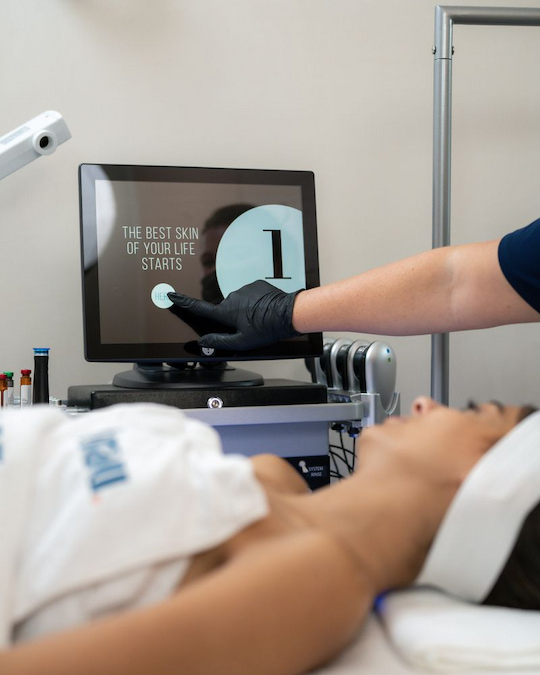
The treatment has two distinct parts that work on different timelines.
The SkinPen device creates thousands of fine micro-channels in the skin. This controlled injury prompts the skin to repair itself and lay down new collagen and elastin, the structural half. That process is slow and continues for weeks and months after each session.
The mesotherapy step then delivers a nourishing serum (typically containing hyaluronic acid, vitamins, and peptides) directly through those open channels. This part works more quickly, mainly by increasing hydration and giving the skin a temporary glow.
Because these effects happen at different speeds, it’s easy to mistake the early glow for the final result or wonder why texture takes longer to improve than expected.
What’s Actually Happening Under The Skin
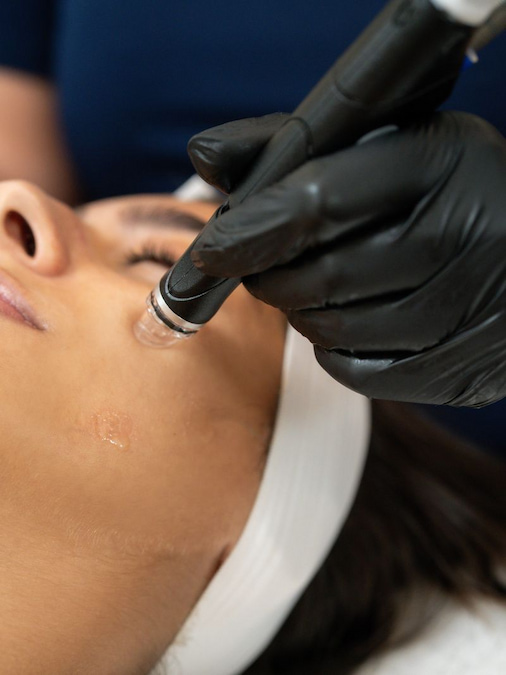
The SkinPen creates controlled micro-injuries. The skin responds by sending repair signals that stimulate new collagen and elastin production. Collagen is the protein that gives skin its firmness and smooth surface; elastin helps it bounce back.
New collagen does not appear overnight. It builds over weeks and months, which is why a treatment that works on collagen cannot deliver its full effect in a few days. It’s a gradual process happening beneath the surface, rather than a surface treatment that produces its full effect immediately.
Realistic Results, Session By Session
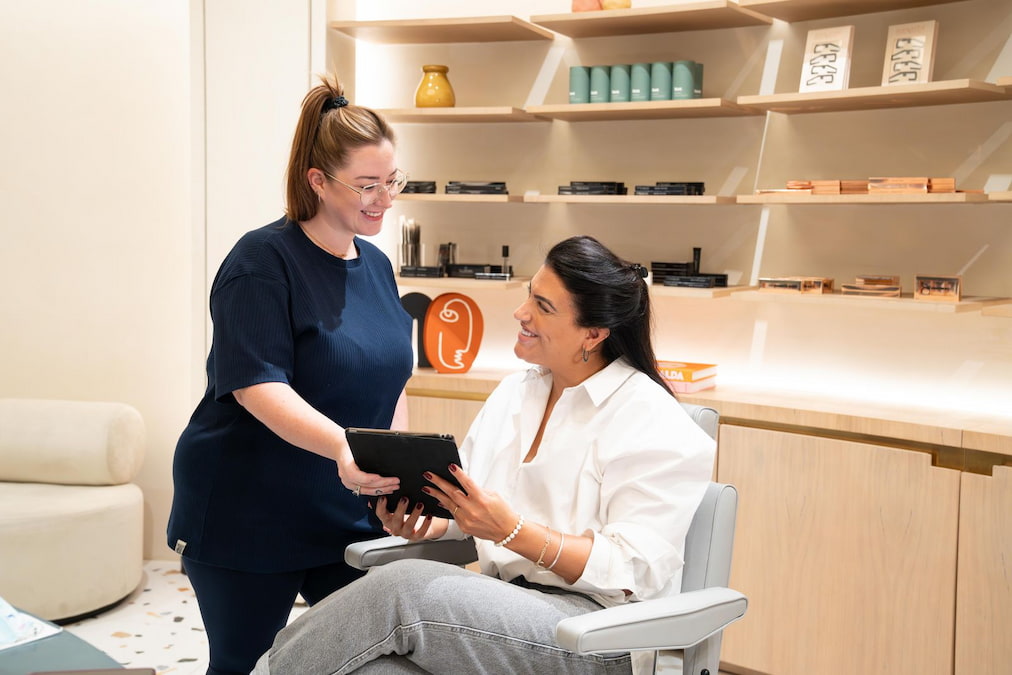
A standard course is four sessions spaced roughly four weeks apart. The full result becomes clearer in the months after the final one.
After Session 1
Days 1–3 bring redness and tightness. Around 48–72 hours, many people notice a glow. That early glow comes from the serum and the skin’s immediate response; it fades. It is not your long-term result.
After Session 2 (Around 4–8 Weeks)
This is usually when the first noticeable texture changes appear. Skin feels smoother, makeup sits more evenly, and foundation stops catching on rough patches.
After Session 3 (Around 2–3 Months)
Most people first see a difference in photographs. Fine lines look softer, and pores cast less shadow. The improvement is still building.
After Session 4 And The Months That Follow (3–6 Months)
This is when the overall improvement becomes much easier to see in before-and-after photos. Texture is refined, early fine lines are reduced, and overall skin quality looks more even.
6–12 Months
Results hold with occasional maintenance sessions. Without them, they fade gradually as the skin continues its natural turnover.
Fine Lines vs Skin Texture: Which One Responds Better
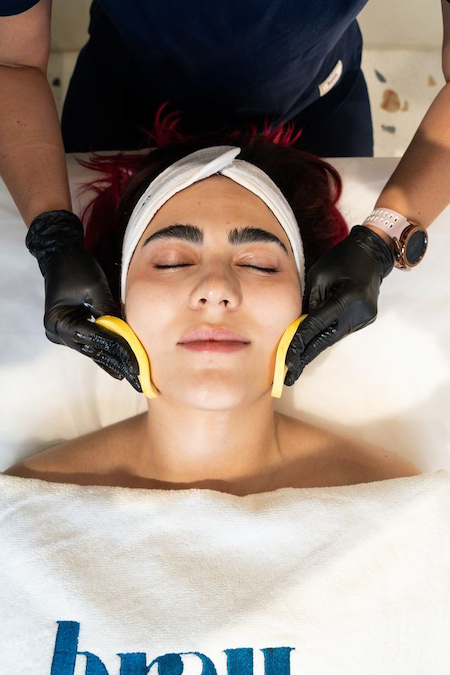
Texture usually improves faster and more consistently. Surface roughness, dullness, congestion and the general “grain” of the skin usually improve first, often noticeable by session two or three.
Fine lines are slower and more variable. Line depth makes a big difference. Crepey under-eye crinkling, upper-lip lines and early crow’s feet tend to soften noticeably. Lines that have been settling for years change far less.
The practical rule of thumb: the finer the line and the more recently it appeared, the better it responds.
What Skinpen Mesotherapy Won’t Change
Deep, Settled Lines and Expression Lines
This treatment rebuilds the skin’s own structure. It does not stop the muscle movement that creates expression lines or replace lost volume. Those are different concerns that need different approaches.
Loose Skin Along The Jaw And Neck
Softening texture is not the same as tightening. Significant laxity usually requires a different approach, such as an energy-based treatment like RF microneedling.
Ice-Pick Acne Scars
Narrow, deep ice-pick scars tend to respond less well. Broader rolling and boxcar scars usually respond better. Knowing which type you have before you book avoids disappointment. Active breakouts are not a target either.
Stubborn Patches of Pigmentation
Overall tone often improves, but set patches of darker pigment usually need a different plan. Raise this at consultation rather than assuming a course will clear them.
Permanence
Skin keeps turning over. Without maintenance, the result fades over 6–12 months.
Planning A Course Around Your Calendar
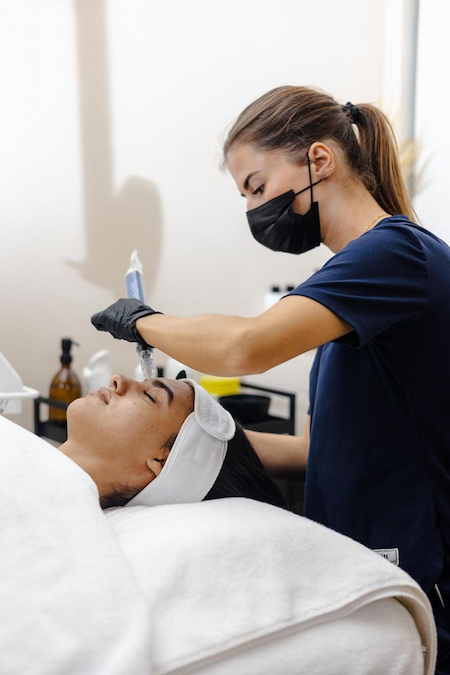
Four sessions a month apart plus the months needed for collagen to mature means a wedding, Eid, graduation or photoshoot needs roughly five to six months of preparation, not four weeks.
Work backwards from the date. Never book a session in the week before an important event; you want the 48-hour redness window well behind you. If you are planning around Ramadan, factor in that changes in hydration and sleep can affect how comfortably the skin recovers between sessions.
The First 7 Days: What Actually Happens
Day 0–2
Redness similar to a mild sunburn, tightness and warmth.
Day 2–4
Possible light bronzing, dryness and flaking.
Day 5–7
Most people are back to normal.
Brau recommends waiting around 48 hours before applying makeup. Numbing cream is applied first. Most clients describe the pass itself as strong prickling rather than sharp pain, and the discomfort ends when the pass ends.
If you have a history of cold sores, mention it at consultation so we can plan the time.
Deeper Skin Tones: What To Know
Because SkinPen works mechanically rather than with heat or light, it can be a gentler option for deeper skin tones than some energy-based treatments.
Gentler is not risk-free. Deeper skin can be more prone to marks after any treatment that stresses it. The two things that matter most are the settings your therapist chooses and how consistent you are with sun protection in the two weeks afterwards. Ask what depth is being used and why, and treat SPF as non-negotiable.
How to Protect the Result in Riyadh’s Climate
Collagen continues to develop for months, so protecting your skin from UV exposure is important for maintaining the result. Riyadh delivers strong UV year-round along with very low humidity and constant air conditioning, both of which can make the skin feel drier and more uncomfortable while the barrier recovers between sessions.
To protect your results:
- Broad-spectrum SPF every morning and reapplied
- No retinol, acids or exfoliants for a week after each session
- Barrier-first moisturising throughout the course
- Topical vitamin C once the skin has settled
Before treatment, pause retinoids and acids for seven days and ease off sun exposure for two weeks, matching Brau’s protocol.
So — Is It Worth It?
Yes, if your main concerns are texture, early fine lines, enlarged pores, or broader acne scarring, you can commit to a full course of four sessions, and you will maintain the result with SPF and occasional follow-ups.
It is not worth it if you want a single-session transformation, your primary issue is volume loss or loose skin, or you will not wear daily sunscreen.
Cost depends on the number of sessions, the areas treated, and any add-ons. A consultation is the clearest way to see whether it fits your goals and timeline.
The Honest Verdict
SkinPen mesotherapy can be a useful option for improving texture and early fine lines, provided you treat it as a four-session course with a months-long payoff rather than a facial that delivers instant results.
If you would like to discuss whether it suits your skin and schedule, a consultation is the best next step.
